Where Should You Get Chevrolet Service in Boulder?
A qualified independent shop can handle most Chevrolet maintenance, diagnostics, and repairs. Here is what Boulder drivers should look for when choosing one.
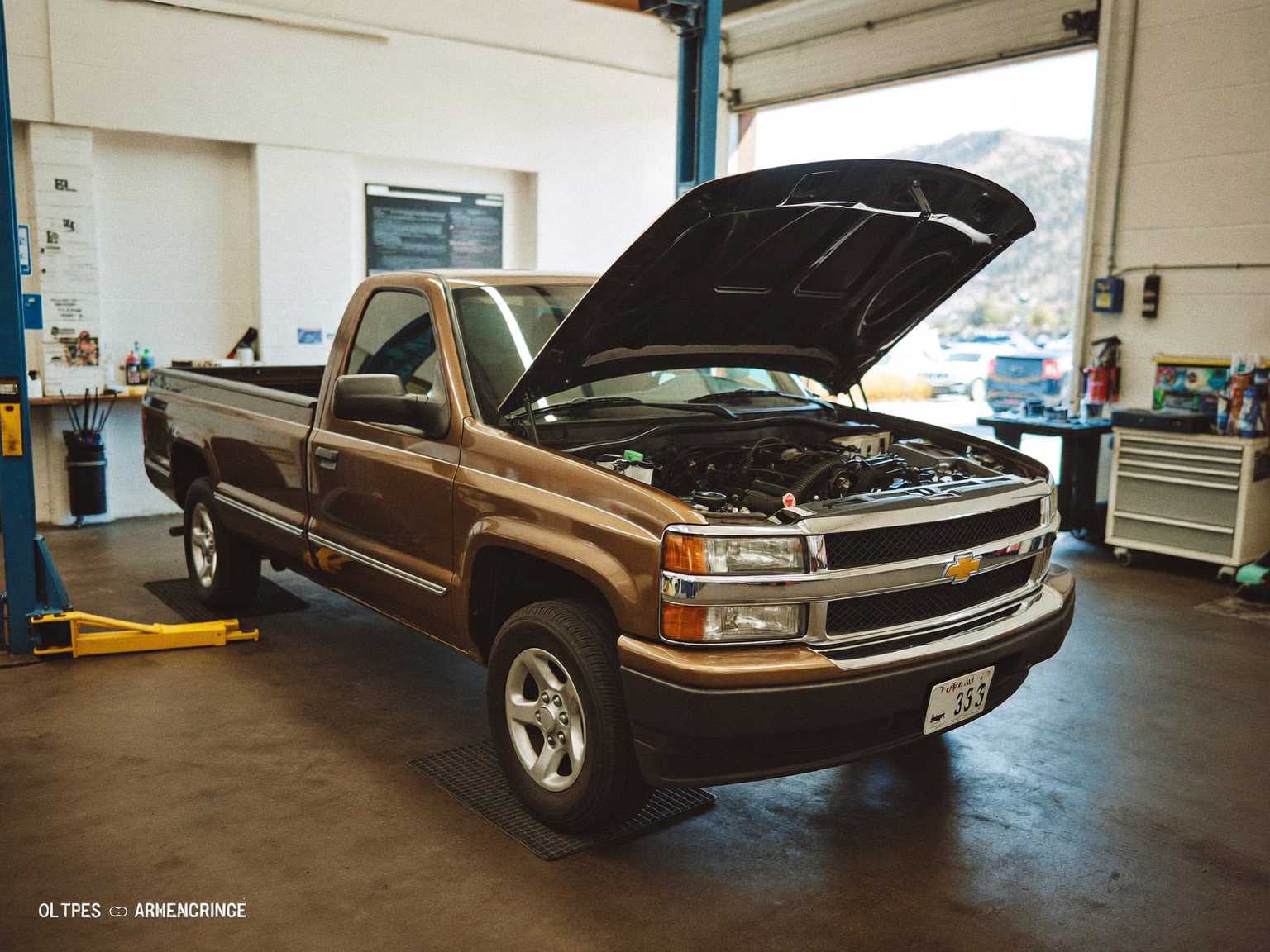
For Chevrolet service in Boulder, choose an independent repair shop that can perform model-appropriate maintenance, test problems before replacing parts, and explain which work is actually due. We recommend looking for broad mechanical and electrical capability, documented inspections, and experience with Chevrolet cars, SUVs, trucks, hybrids, and EVs.
Choosing Chevrolet Service in Boulder
Chevrolet builds vehicles for very different jobs. A Malibu commuting on US-36 does not place the same demands on its drivetrain, brakes, or cooling system as a Silverado regularly climbing into the foothills. An Equinox used for school trips may accumulate short journeys and frequent cold starts, while a Tahoe carrying passengers and outdoor gear may see mountain grades, snow, and long highway drives.
That variety is why choosing a shop should involve more than asking whether it works on domestic vehicles. A capable Boulder mechanic should understand how vehicle configuration, engine family, drivetrain, mileage, service history, and actual use affect the maintenance plan.
Can an independent shop service a Chevrolet properly?
Yes, a qualified independent shop can complete most Chevrolet maintenance and repair work without sending the vehicle to a dealership. That includes fluid services, brakes, steering and suspension work, cooling system repairs, drivability diagnosis, electrical testing, and many common engine and transmission concerns. We begin by identifying the exact model, engine, drivetrain, and maintenance history, then inspect and test the vehicle rather than applying a generic Chevy checklist. Our NAPA Gold Certified shop provides Chevrolet service in Boulder alongside general repair for every make, which also gives us useful experience with components and systems shared across a wide range of vehicles.
When does a Chevrolet dealership make more sense?
A dealership may be the appropriate choice when a vehicle has an open recall, a repair covered by a factory warranty, or a procedure that requires manufacturer-controlled equipment or authorization. Certain software campaigns, security-related programming tasks, and warranty decisions may also need dealer involvement. We believe a trustworthy independent shop should say so when that is the best route. For ordinary maintenance, mechanical repairs, electrical diagnosis, and many post-warranty concerns, an independent shop can often provide the continuity and direct communication owners want.
What Qualified Chevrolet Care Should Cover
A good shop should be ready to maintain the whole vehicle, not just reset the reminder after changing the oil. That means evaluating safety systems, wear items, fluid condition, leaks, warning lights, and concerns reported by the driver. Our overview of Boulder auto services shows the range of systems that may need attention over a Chevrolet's life.
The service plan should also reflect actual condition. Factory schedules provide an important baseline, but they do not reveal a torn suspension bushing, an intermittent charging problem, uneven brake wear, or a leak that developed between scheduled visits.
What should routine Chevrolet maintenance include?
Routine maintenance should begin with the manufacturer's schedule for the specific model and powertrain, then be adjusted for operating conditions and inspection findings. Depending on the vehicle, that can involve engine oil and filters, tire rotation, brake inspection, coolant, transmission or drivetrain fluids, spark plugs, belts, hoses, and cabin or engine air filters. Our oil change service in Boulder includes looking beyond the drain plug, because fluid leaks, tire wear, damaged underbody panels, and deteriorating components are easier to address when they are found early. Owners who are unsure what the term means can also review our explanation of what a modern tune-up includes.
Can one shop handle both warning lights and mechanical repairs?
A well-equipped independent shop should be able to investigate both. A warning light is a starting point, not a diagnosis, and a stored fault code identifies the system that noticed a problem rather than automatically naming the failed component. Proper testing may require scan data, electrical measurements, pressure or vacuum testing, visual inspection, and verification under the conditions when the symptom occurs. Mechanical issues can also trigger electronic warnings, so separating the two too early can lead to unnecessary parts replacement. If the message is maintenance-related rather than a fault warning, our guide to maintenance reminder lights explains that distinction.
What about Chevrolet trucks and four-wheel drive vehicles?
Silverado, Colorado, Tahoe, and Suburban owners should choose a shop that considers how towing, payload, tire size, four-wheel drive use, and mountain travel affect the vehicle. Transfer cases, differentials, wheel bearings, steering components, brakes, cooling systems, and transmission operation can all be influenced by use. We also look for modifications that change suspension geometry or drivetrain loading. A truck used mainly for commuting needs a different conversation from one that regularly travels washboard roads, carries equipment, or climbs steep grades west of Boulder.
Can an independent shop work on Chevrolet hybrids and EVs?
It can if the shop has the training, procedures, and equipment required for electrified vehicles. Models such as the Chevrolet Bolt have conventional service needs including tires, brakes, suspension, cabin filtration, cooling circuits, and low-voltage electrical systems, even though they do not need engine oil changes. High-voltage concerns require additional safety practices and accurate diagnosis. Owners should ask whether the shop routinely services hybrid and electric vehicles rather than assuming every general repair facility is prepared to work around a high-voltage system.
How to Compare Chevrolet Repair Shops
The clearest signs of a good shop usually appear in its process. Before approving work, you should understand the concern being addressed, how it was confirmed, and whether the recommendation is urgent, preventive, or optional. Vague descriptions and automatic parts replacement are not substitutes for testing.
A long-term service relationship also helps establish a useful record. When inspection findings and completed work are documented over time, a technician can track developing wear and avoid repeating services. That matters when a used Chevrolet arrives with incomplete paperwork or when multiple drivers share responsibility for the vehicle.
What should you ask before authorizing Chevrolet service?
Ask how the shop will diagnose the concern, whether it will inspect related components, and how it prioritizes recommendations. It is also reasonable to ask whether the technicians have experience with your model and whether the shop can support mechanical, electrical, and maintenance needs in one place. For a warning light or intermittent symptom, provide details about engine temperature, road speed, weather, fuel level, recent service, unusual sounds, and exactly when the problem occurs. Those observations can shorten the path to an accurate answer without prejudging the cause.
Why does the diagnostic process matter so much?
Modern Chevrolet vehicles coordinate the engine or electric drive system, transmission, brakes, stability control, body electronics, driver assistance features, and networked control modules. A weak battery, wiring fault, communication problem, mechanical issue, or incorrect sensor input can create symptoms in more than one system. Reading codes without testing those possibilities can result in replacing a functioning component. We prefer a structured process that confirms the complaint, gathers relevant data, performs targeted tests, repairs the verified cause, and checks that the original problem is resolved.
Should service history affect the first appointment?
Yes, service history helps us distinguish confirmed maintenance from assumptions. Bring invoices or digital records if they are available, especially after purchasing a used Chevrolet. If the history is missing, we do not recommend automatically replacing every fluid or component. We inspect what can be evaluated, identify time-sensitive safety concerns, compare the vehicle with its applicable schedule, and build a practical plan. This is the same measured approach discussed in our guide to choosing repair for a specific vehicle in Boulder, even though Chevrolet models have their own systems and requirements.
Serving Boulder and the Front Range
Boulder driving combines short urban trips with conditions that can expose weaknesses quickly. Stop-and-go travel near Downtown Boulder is different from sustained speeds on US-36, and a vehicle that feels normal around town may reveal cooling, braking, or drivetrain concerns while climbing Boulder Canyon. Winter snow, rapid temperature changes, foothills terrain, and road debris also influence how we inspect tires, batteries, suspension parts, underbody components, and fluid leaks.
We provide auto repair in Boulder for drivers from South Boulder and Table Mesa, North Boulder, and surrounding communities such as Louisville. A commuter traveling between Louisville and Boulder may prioritize reliability on US-36, while a Boulder resident heading regularly toward Nederland may place heavier demands on brakes, cooling, and four-wheel drive systems. Longmont and Superior drivers can face the same mix of highway commuting, Front Range wind, snow, and steep weekend travel.
Local use should be part of the service conversation. We want to know whether a Chevrolet spends most of its time making short trips, sitting between occasional drives, carrying equipment, towing, or heading into the mountains. Those details help us interpret wear patterns and recommend work based on the vehicle in front of us rather than a generic regional checklist.
Planning Your Next Chevrolet Appointment
Before bringing the vehicle in, write down the exact symptom and when it happens. Note warning messages before clearing them, and avoid disconnecting the battery solely to turn off a light because doing so can remove information that helps with diagnosis. If the concern is intermittent, details about road conditions, temperature, speed, and recent repairs are useful.
How do you decide whether a shop is the right fit?
Choose the shop that communicates clearly, works from evidence, understands the full vehicle, and is willing to separate immediate needs from future planning. For most Chevrolet owners, the right independent shop should be able to provide routine maintenance, investigate warning lights, repair mechanical and electrical systems, and recognize the limited situations that belong at a dealer. That combination makes it easier to keep a commuter, family SUV, work truck, or electrified Chevrolet dependable for Boulder and Front Range driving.
Book the shop Boulder trusts.
Free loaner vehicles for qualifying repairs. Three-year, 36,000-mile NAPA warranty on every covered job.